Following on from yesterdays post today I'll give the second part of a recap of the scandals that are plaguing the Mother and Baby Homes.
Bessborough House Mother and Baby home run by the Sacred Heart Sisters of Jesus and Mary opened in 1922. TV3's documentary spoke to a woman names Helen Murphy who was born in Bessborough in 1962. Helen Murphy had been placed for adoption. She left Bessborough at seven months old and spent much of her grown life feeling rejected while not knowing her true history. Unfortunately by the time her search for her birth mother came to fruition Murphy found out that her mother had died just three weeks prior however she was reunited with her sister. Again Helen Murphy maintains she was one of the lucky ones who made it out but she believes that the only way we will know the true extent of the number of children buried at Bessborough is by excavating and exhuming the site. Murphy also wants light shed on the conditions in which the mothers were treated at Bessborough.
June Goulding, a midwife who worked in Bessborough in 1951 sheds light of some of this treatment that she saw during her time there. She told the programme that there was no kindness, no empathy and that the mothers were treated like outcasts and criminals. She outlines how on attending one particularly difficult birth and noticing that there was no foetal heartbeat the nun stated that the woman would still have to suffer through. The woman in question went through 36 hours of labour to give birth to a nine pound stillborn baby. June Goulding's 1998 book The Light in the Window details further the working conditions of heavily pregnant women and girls who tarred roads, tended to gardens, polished floors etc. often well into their labours. When they were in labour they were given no painkillers, no stitches and no antibiotics for infections that occurred.
In 1951 Dr. James Deeny (Chief Medical Officer) became suspicious of the high mortality rates for children in Bessborough and conducted investigations. Despite seeing nothing out of the ordinary in his examination of the building and wards he decided to examine the children himself. Dr. Deeny found that every child had a purulent infection of the skin and green diarrhoea that someone had intended to cover up. In an unprecedented move, Dr. Deeny sacked the matron/head nun and temporarily closed Bessborough.
Which brings us to Sr. Sarto, Sr. Sarto is the Mother Superior of Bessborough and is, to say the least, an interesting woman. Over the next couple of weeks I intend to post about both her and Dr. Deeny but for quite different reasons. Sr. Sarto appears intent of defending her order and the church at all costs. She says of the nuns under her charge " I don't think it's fair. We had a good staff, some of them are still with us. I think it's sad that it has come to this". Sr. Sarto has a list of reasons why the child mortality rate was high: lack of antibiotics, close proximity etc. However before Dr. Deeny's involvement Bessborough had a child mortality rate of up to 51% with 100 out of 180 children dying in one year before Dr. Deeny's investigation. After Dr. Deeny reopened the home the child mortality rate plummeted to under 2% with yearly deaths never getting above single figures. Sr. Sarto is still indignant that this news is currently breaking "We gave our lives to looking after the girls" she says "and we're certainly not appreciated for doing it".
Mike Millotte, who was also interviewed, wrote Banished Babies in 1997, a harrowing read which outlines the extent to which children and babies were adopted and sold, sometimes out of Ireland. He details that often a mother would have her child for two years in a Mother and Baby Home before they were separated and the child taken away with often no more than an hours notice. Money changed hands for these adoptions and often couples were asked for ongoing donations for years afterwards. Despite the 1952 Adoption Act deeming money for adoptions being illegal the process was still ongoing. At least two thousand children were exported to the United States over a twenty year period after World War II. Many of these children were sold to American couples who had been deemed unsuitable candidates as prospective adoptive parents in their home country. The criteria for adoptions from Catholic Mother and Baby Homes was that prospective parents be Catholic, Mass-goers and obviously wealthy enough to afford the extortionate fees and subsequent donations to the convent.
The degree to which the mothers in the homes consented to these adoptions raises many questions. Sr. Sarto maintains, in the face of large amounts of evidence, that all these adoptions were legal and consensual. However, Mike Millotte found in many cases that the mothers did not have their rights explained to them, no other options were up for discussion and many who did sign adoption papers felt they had no other options under heavy duress. Furthermore no counselling or psychological services were ever offered to the mothers. There is an interesting note on the Adoption Rights Alliance of Ireland's website referring to Sr. Sarto which states that in 2005, Sr Sarto "secretly join(ed) an on-line adoption support group and summons some members to her office to question their posts and begins personally harassing other members via phone and letter". The entire timeline of shame can be found here and is well worth reading for a concise history of adoption out of Mother and Baby Homes amongst other aspects of Ireland's shameful history.
I thought this would be a two parter but I'm splitting again into a three parter as I want to go into further detail than is in the TV3 documentary about the vaccine trials that children in Mother and Baby Homes were subjected to. Also lest I be accused of anti-Catholic bias (again) I'll deal with the programmes findings on the Church of Ireland's Bethany Mother and Baby Home.
Tuesday, 1 July 2014

Monday, 30 June 2014
A Secret Buried: The Mother and Baby Scandal Part 1
Ever since the scandal of 796 babies buried in the Tuam Mother and Baby home broke slowly in dribs and drabs I've felt like Alice going down the rabbit hole. Each piece of research that I do or read about leads on to an often more horrible piece of evidence surfacing. I am glad that the government have set up their inquiry into the Mother and Baby Homes, I hope it will be as full, frank, transparent and honest as possible and I hope that it will be of some comfort for survivors and their loved ones.
Last week TV3 broadcast a documentary about the Mother and Baby Homes titled A Secret Buried: The Mother and Baby Scandal. I'm going to do a run down of the programme for some twitter followers who are unable to access it from outside of Ireland but anyone in Ireland I would urge you to have a look at it on the 3Player here: A Secret Buried.
As an aside when I sat to re-watch the programme again today to take some notes it was with a certain sense of irony that I heard the bong of the Angelus bells ringing from the local Catholic church through my open balcony door. The second viewing was no less harrowing than my first. Dr. Lindsey Earner Byrne (Professor of History and Archives, University College Dublin) gave a run down of the establishment of the Irish Free State, the workhouses residual from when the country was a part of Britain were converted to County Homes. These County Homes then consisted mostly of poverty stricken people with no ability to work and also contained significant numbers of unmarried women and their babies. Dr. Diarmuid Ferriter (Professor of Modern Irish History, University College Dublin) further elaborates that the state and the church classified the poor into certain categories. There was the 'respectable' or 'deserving' poor and then there was the unmarried mothers classified as 'offenders', 'hardened sinners' and so on. These women it was thought must be kept separate for fear of having a "contagion effect" on public morals. They must also be kept somewhere as both Church and State had a fear of these women travelling to our more liberal neighbour,England and perish the thought that their children might be adopted into 'English, Protestant hands'. In 1924, Séamus Burke, the then Minister for Local Government and Public Health wrote to the Bishop of Waterford, Dr Bernard Hackett on the need to take unmarried mothers out of the County Homes, he said: "both for their own benefit" and in the interests of what he called "the respectable poor who are compelled to seek its shelter, so that there should be no undesirable associations connected with it". Thus began the establishment of Mother and Baby Homes.
Susan Lohan of the Adoption Rights Alliance outlined some of the conditions of these women and girls who were considered "inmates" in such homes at the time. There would be high walls, big gates, isolated from the wider community so that they would not give the idea that pre-marital sex was normal. The women surrendered their own clothes on entry and wore shapeless uncomfortable uniforms. They were given new names and forbidden to tell the other women their real name. Some of them would have had their hair cut tight or shaved. All of these measures were designed to rob these girls and women of their identity and spirit and ultimately to break them down.
As a result of the stigma at the time many survivors still feel shame today and are unwilling to speak publicly. "Veronica" outlined her experience anonymously to the programme, she gave birth in a Mother and Baby Home in 1971 and her daughter was taken from her. "Veronica" wasn't told about her baby's death and burial until long after the fact. She rang the hospital from a public phone one day and the nurse told her "your baby was in a very bad condition when she arrived here and she only lasted two days". "Veronica" still carries the weight of those days although she knows what happened was wrong. She says it is "desperate (to be) put down as somebody bad, when you're not."
St Mary's Mother and Baby Home operated in Tuam, Co. Galway from 1925 to 1961 by the Bons Secours nuns was the starting point for the breaking story a number of weeks ago. JP Rodgers was born there in 1947 and he speaks about his experiences of being "forcibly separated (from his mother) by Church and State" when he was one year old. Rodgers was kept in Tuam until he was about five and a half or six. He states that it was a lottery how you would get out of the home between fostering, adoption, malnutrition or sold. He was not reunited with his birth mother until he was thirty-four years old and described it as "probably the greatest day" of his whole life. Rodgers said that when he met with his mother she had kept a lock of his hair that she cut on the day they were forcibly separated she spoke of being stigmatised as a 'fallen woman' and branded 'evil' and ostracised as a threat to society. He also tellingly notes that "the men were never ostracised or accused of anything".
In the 1970's the Tuam Mother and Baby Home was demolished to make way for a housing estate. Frankie Hopkins speaks of when he was a boy at the time uncovering the tank filled with little skeletons. A couple of days later the boys were told never to go back to the site, a priest was called to bless the area and no more would be spoken about it. There was a shrine carefully kept and maintained by local people. Catherine Corless, the historian who was instrumental in bringing this mass grave of children to light purchased the 796 death certificates of the babies and children at a cost of over €3000. The children died at a rate of about twenty-two a year of TB, measles, malnutrition etc. No one appeared to know where they were buried. JP Rodgers speaks about it as he realises he may have been one of the 'lucky' ones and rightly asks "Do (those children) not deserve something better?"
This leads to a question mark over all of the Mother and Baby institutions. Nobody in the State appears to know where the bodies of these children are in a case of disposal rather than burial.
I'll leave this post here as it's turning out to be quite long and tomorrow I'll resume with A Secret Burial's detailing of the Bessborough and Bethany Mother and Baby Homes, the vaccine trials that were done on babies and children in those homes and the adoption and sale of some of those children.
Last week TV3 broadcast a documentary about the Mother and Baby Homes titled A Secret Buried: The Mother and Baby Scandal. I'm going to do a run down of the programme for some twitter followers who are unable to access it from outside of Ireland but anyone in Ireland I would urge you to have a look at it on the 3Player here: A Secret Buried.
As an aside when I sat to re-watch the programme again today to take some notes it was with a certain sense of irony that I heard the bong of the Angelus bells ringing from the local Catholic church through my open balcony door. The second viewing was no less harrowing than my first. Dr. Lindsey Earner Byrne (Professor of History and Archives, University College Dublin) gave a run down of the establishment of the Irish Free State, the workhouses residual from when the country was a part of Britain were converted to County Homes. These County Homes then consisted mostly of poverty stricken people with no ability to work and also contained significant numbers of unmarried women and their babies. Dr. Diarmuid Ferriter (Professor of Modern Irish History, University College Dublin) further elaborates that the state and the church classified the poor into certain categories. There was the 'respectable' or 'deserving' poor and then there was the unmarried mothers classified as 'offenders', 'hardened sinners' and so on. These women it was thought must be kept separate for fear of having a "contagion effect" on public morals. They must also be kept somewhere as both Church and State had a fear of these women travelling to our more liberal neighbour,England and perish the thought that their children might be adopted into 'English, Protestant hands'. In 1924, Séamus Burke, the then Minister for Local Government and Public Health wrote to the Bishop of Waterford, Dr Bernard Hackett on the need to take unmarried mothers out of the County Homes, he said: "both for their own benefit" and in the interests of what he called "the respectable poor who are compelled to seek its shelter, so that there should be no undesirable associations connected with it". Thus began the establishment of Mother and Baby Homes.
Susan Lohan of the Adoption Rights Alliance outlined some of the conditions of these women and girls who were considered "inmates" in such homes at the time. There would be high walls, big gates, isolated from the wider community so that they would not give the idea that pre-marital sex was normal. The women surrendered their own clothes on entry and wore shapeless uncomfortable uniforms. They were given new names and forbidden to tell the other women their real name. Some of them would have had their hair cut tight or shaved. All of these measures were designed to rob these girls and women of their identity and spirit and ultimately to break them down.
As a result of the stigma at the time many survivors still feel shame today and are unwilling to speak publicly. "Veronica" outlined her experience anonymously to the programme, she gave birth in a Mother and Baby Home in 1971 and her daughter was taken from her. "Veronica" wasn't told about her baby's death and burial until long after the fact. She rang the hospital from a public phone one day and the nurse told her "your baby was in a very bad condition when she arrived here and she only lasted two days". "Veronica" still carries the weight of those days although she knows what happened was wrong. She says it is "desperate (to be) put down as somebody bad, when you're not."
St Mary's Mother and Baby Home operated in Tuam, Co. Galway from 1925 to 1961 by the Bons Secours nuns was the starting point for the breaking story a number of weeks ago. JP Rodgers was born there in 1947 and he speaks about his experiences of being "forcibly separated (from his mother) by Church and State" when he was one year old. Rodgers was kept in Tuam until he was about five and a half or six. He states that it was a lottery how you would get out of the home between fostering, adoption, malnutrition or sold. He was not reunited with his birth mother until he was thirty-four years old and described it as "probably the greatest day" of his whole life. Rodgers said that when he met with his mother she had kept a lock of his hair that she cut on the day they were forcibly separated she spoke of being stigmatised as a 'fallen woman' and branded 'evil' and ostracised as a threat to society. He also tellingly notes that "the men were never ostracised or accused of anything".
In the 1970's the Tuam Mother and Baby Home was demolished to make way for a housing estate. Frankie Hopkins speaks of when he was a boy at the time uncovering the tank filled with little skeletons. A couple of days later the boys were told never to go back to the site, a priest was called to bless the area and no more would be spoken about it. There was a shrine carefully kept and maintained by local people. Catherine Corless, the historian who was instrumental in bringing this mass grave of children to light purchased the 796 death certificates of the babies and children at a cost of over €3000. The children died at a rate of about twenty-two a year of TB, measles, malnutrition etc. No one appeared to know where they were buried. JP Rodgers speaks about it as he realises he may have been one of the 'lucky' ones and rightly asks "Do (those children) not deserve something better?"
This leads to a question mark over all of the Mother and Baby institutions. Nobody in the State appears to know where the bodies of these children are in a case of disposal rather than burial.
I'll leave this post here as it's turning out to be quite long and tomorrow I'll resume with A Secret Burial's detailing of the Bessborough and Bethany Mother and Baby Homes, the vaccine trials that were done on babies and children in those homes and the adoption and sale of some of those children.
Monday, 9 June 2014
Time to get Angry!
The time for silence is long gone. We have watched this country hide too many scandals under the carpet, we have seen too many reports which did nothing more than whitewash. We have heard the church's silence or mealy mouthed apologies. We have shamed ourselves because we too have remained silent for far too long. Now is a time to get angry and demand answers.
There has been much written in recent weeks about the mass children's grave of 796 children at the former Bon Secours Mother and Baby Home. The story broke first with the Irish Mail on Sunday detailing historian Catherine Corless's research into the grave. The Irish press for the most part remained silent. This gained ground because of anger and social media. Anger at the scale of the find, anger at the media's casting a blind eye and anger that no one seemed to be listening. International media picked up on it, Irish media remained for the most part, silent. With the exception of the Irish Times who then wrote that there couldn't possibly be 796 bodies in the one tank. Oh well, that's okay then isn't it? Catherine Corless through the Freedom of Information act purchased 796 death certificates of children who had died in the Mother and Baby Home in Tuam, they are in the tank, or the ground, they are there somewhere and we need to know where.
A snowball effect happened as more information about other such mass graves came out, evidence of more than 2000 children being used in drug trials without their mother's consent. The media picked up its pace, the issue was raised in the Dáil. We are losing time, the government will vote on whether or not to have a full public inquiry. The good sisters at Bon Secours decided to hire a PR adviser. Wednesday the government will vote, Wednesday may be too late.
We have played softly softly for far too long with these scandals in the past. We cannot allow any more church files to 'disappear' in fires. We need to demand that they hand over their files on these homes and they need to hand them over now, no ifs or buts and no asking nicely.
We have been silent for far too long. It is time to get loud and angry and demand that for once we see accountability. Let's be outside the Dáil on Wednesday evening as they vote, let's get angry, let's make a racket and let's never, ever stop until for once we see some justice!

There has been much written in recent weeks about the mass children's grave of 796 children at the former Bon Secours Mother and Baby Home. The story broke first with the Irish Mail on Sunday detailing historian Catherine Corless's research into the grave. The Irish press for the most part remained silent. This gained ground because of anger and social media. Anger at the scale of the find, anger at the media's casting a blind eye and anger that no one seemed to be listening. International media picked up on it, Irish media remained for the most part, silent. With the exception of the Irish Times who then wrote that there couldn't possibly be 796 bodies in the one tank. Oh well, that's okay then isn't it? Catherine Corless through the Freedom of Information act purchased 796 death certificates of children who had died in the Mother and Baby Home in Tuam, they are in the tank, or the ground, they are there somewhere and we need to know where.
A snowball effect happened as more information about other such mass graves came out, evidence of more than 2000 children being used in drug trials without their mother's consent. The media picked up its pace, the issue was raised in the Dáil. We are losing time, the government will vote on whether or not to have a full public inquiry. The good sisters at Bon Secours decided to hire a PR adviser. Wednesday the government will vote, Wednesday may be too late.
We have played softly softly for far too long with these scandals in the past. We cannot allow any more church files to 'disappear' in fires. We need to demand that they hand over their files on these homes and they need to hand them over now, no ifs or buts and no asking nicely.
We have been silent for far too long. It is time to get loud and angry and demand that for once we see accountability. Let's be outside the Dáil on Wednesday evening as they vote, let's get angry, let's make a racket and let's never, ever stop until for once we see some justice!
Monday, 10 March 2014
International Women's Day - Reproductive Freedom!
On Saturday the National Women's Council of Ireland held a soapbox event, which took place in O'Connell Street just opposite the GPO. Many women (and a few good men) from different walks of life spoke, yelled and shouted about what would make this world a better place for the women who live in it. (BTW just heading this one off at the pass: International Men's Day is November 19th). The topics were as numerous and varied as the people speaking about them. Safer childbirth practices, emigration, disability, poverty, Margaretta D'Arcy were among the many,many topics discussed. I was proud to be among all those wonderful voices on Saturday, and I'd like to thank the NWCI for holding such a great event.
I represented the Abortion Rights Campaign, and spoke about women's right to reproductive freedom and this is what I had to say:
"I am a member of the Abortion Rights Campaign, and what we need to change for women is that we need to allow every woman to have the right to reproductive freedom.
It has been said that hard cases make bad law. The reverse is true. Bad law leads to hard cases. A law that governs anyone’s bodily integrity and ability to make decisions on what’s best for them is a bad law.
The law moves slowly, slower than the people it is meant to represent, slower than advances in public opinion, social justice and medicine. This is especially apparent when it comes to women’s health, and obviously apparent in Ireland where it took the powers that be more than two decades to legislate for the needs of just one of its many constituents. More than twenty one years on the people have moved forward, the law has not. The legislation that was passed last summer leaves the majority of women without the access they need to abortion in this country. And it has worsened the situation for so many women who can’t travel by adding a clearly possible prison sentence to abortion within the state.
And so we now look at the Eight Amendment to the constitution which equates the life of a pregnant woman with that of an implanted embryo. This does not reflect public opinion in Ireland. The Eight Amendment is discriminatory. It has a chilling effect on all pregnant women, their partners, their families and the medical professionals who treat them.
Restrictive abortion laws do not restrict abortion. They don’t change a culture where women are legally punished if they do or economically and socially punished if they don’t. Restrictive abortion laws more it more difficult, more dangerous and more detrimental to women making the decision to terminate.
Choice respects each person’s right and responsibility to make their own decisions about their own bodies, including the choice to continue with or end a pregnancy. Every person should be able to carry out their choice safely, with dignity and without having to circumvent coercion, stigma or unnecessary obstacles.
A commitment to choice means that we have to work to make sure there is a level playing field, so that the ability of a woman to act on her choice is not limited by economic, social or political factors.
No society can truly call itself free and democratic if people are prevented from freely deciding what happens to or within their own bodies. The law has no place to govern inside us and the Eight Amendment needs to go!"
http://www.irishtimes.com/news/ireland/irish-news/feminist-fire-and-passion-on-show-at-gpo-soapbox-1.1718250
I represented the Abortion Rights Campaign, and spoke about women's right to reproductive freedom and this is what I had to say:
"I am a member of the Abortion Rights Campaign, and what we need to change for women is that we need to allow every woman to have the right to reproductive freedom.
It has been said that hard cases make bad law. The reverse is true. Bad law leads to hard cases. A law that governs anyone’s bodily integrity and ability to make decisions on what’s best for them is a bad law.
The law moves slowly, slower than the people it is meant to represent, slower than advances in public opinion, social justice and medicine. This is especially apparent when it comes to women’s health, and obviously apparent in Ireland where it took the powers that be more than two decades to legislate for the needs of just one of its many constituents. More than twenty one years on the people have moved forward, the law has not. The legislation that was passed last summer leaves the majority of women without the access they need to abortion in this country. And it has worsened the situation for so many women who can’t travel by adding a clearly possible prison sentence to abortion within the state.
And so we now look at the Eight Amendment to the constitution which equates the life of a pregnant woman with that of an implanted embryo. This does not reflect public opinion in Ireland. The Eight Amendment is discriminatory. It has a chilling effect on all pregnant women, their partners, their families and the medical professionals who treat them.
Restrictive abortion laws do not restrict abortion. They don’t change a culture where women are legally punished if they do or economically and socially punished if they don’t. Restrictive abortion laws more it more difficult, more dangerous and more detrimental to women making the decision to terminate.
Choice respects each person’s right and responsibility to make their own decisions about their own bodies, including the choice to continue with or end a pregnancy. Every person should be able to carry out their choice safely, with dignity and without having to circumvent coercion, stigma or unnecessary obstacles.
A commitment to choice means that we have to work to make sure there is a level playing field, so that the ability of a woman to act on her choice is not limited by economic, social or political factors.
No society can truly call itself free and democratic if people are prevented from freely deciding what happens to or within their own bodies. The law has no place to govern inside us and the Eight Amendment needs to go!"
http://www.irishtimes.com/news/ireland/irish-news/feminist-fire-and-passion-on-show-at-gpo-soapbox-1.1718250
Friday, 3 January 2014
The problem with opinions
I'm sure you know the old adage about opinions being like a certain body part used for excretory purposes. Everyone has one but some people's are ill informed and not fit for public consumption.
The problem is our world today is as, Daire O'Briain stated in the past "But there’s this notion that everyone’s opinion is equally valid. My arse! A bloke who’s been a professor of dentistry for 40 years does not have a debate with some eejit who removes his teeth with string and a door!" The problem then is that sometimes when we listen to the 'experts' their opinion is as damaging as the person who knows nothing.
Case in point: Terence Casey the coroner for South Kerry said that the removal of corporal punishment was the "downfall for a lot of things" and that “the lack of punishment has given us a lack of respect of love of life and people’s neighbours and property. The lack of respect for your own life might follow that". He, of course qualifies this, by saying "I might be wrong but that is my own personal feeling". Which is basically another way of saying that he is entitled to his opinion, so that's all right then, no harm done, it's only his opinion to which he is entitled. However, while Mr. Casey may be a coroner, to my knowledge he has no experience in the field of mental health. As coroner he may preside over the unfortunate outcome of suicide but he is not there for the starting and the middle points.
We have to be concerned about the rising suicide rates but the reinstitution of corporal punishment is not the way to go. I was fortunate to grow up in a time without corporal punishment, my parents and other relatives were not so lucky. There were suicides back then too, some due to the cruel behaviour of teachers towards children. These suicides were hushed up, 'death by misadventure', etc. They had to be in order for people to be buried with 'proper' funeral rites and inside the cemetery wall.
Mr Casey is right, we do need to talk about suicide.

Another thing Mr Casey may need to look at before he opens an orifice to give us his opinion or 'personal feeling' again is that he repeatedly uses the archaic phrase "committing suicide". That tells me all I need to know about the worth of his opinions on mental health.
The problem is our world today is as, Daire O'Briain stated in the past "But there’s this notion that everyone’s opinion is equally valid. My arse! A bloke who’s been a professor of dentistry for 40 years does not have a debate with some eejit who removes his teeth with string and a door!" The problem then is that sometimes when we listen to the 'experts' their opinion is as damaging as the person who knows nothing.
Case in point: Terence Casey the coroner for South Kerry said that the removal of corporal punishment was the "downfall for a lot of things" and that “the lack of punishment has given us a lack of respect of love of life and people’s neighbours and property. The lack of respect for your own life might follow that". He, of course qualifies this, by saying "I might be wrong but that is my own personal feeling". Which is basically another way of saying that he is entitled to his opinion, so that's all right then, no harm done, it's only his opinion to which he is entitled. However, while Mr. Casey may be a coroner, to my knowledge he has no experience in the field of mental health. As coroner he may preside over the unfortunate outcome of suicide but he is not there for the starting and the middle points.
We have to be concerned about the rising suicide rates but the reinstitution of corporal punishment is not the way to go. I was fortunate to grow up in a time without corporal punishment, my parents and other relatives were not so lucky. There were suicides back then too, some due to the cruel behaviour of teachers towards children. These suicides were hushed up, 'death by misadventure', etc. They had to be in order for people to be buried with 'proper' funeral rites and inside the cemetery wall.
Mr Casey is right, we do need to talk about suicide.
One cause of rising suicides may be due to the culture of binge drinking in this country. Alcohol, depression and suicidal thoughts do not make good bed fellows. But wait! The esteemed coroner also had something to say about this in the past. He suggested that our drink driving laws were responsible for suicides in older men who felt isolated. Again Casey is putting the cart before the horse, this does need to be looked at but getting rid of or lowering the legal alcohol limit is not the way to go!
Another thing Mr Casey may need to look at before he opens an orifice to give us his opinion or 'personal feeling' again is that he repeatedly uses the archaic phrase "committing suicide". That tells me all I need to know about the worth of his opinions on mental health.
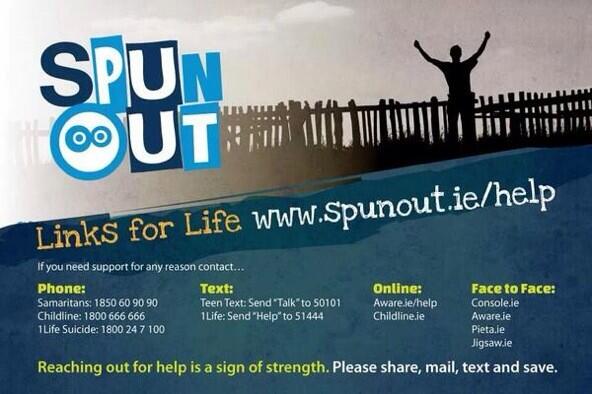
If you have been affected by the discussion of mental health and suicide please contact one of the numbers below, they are trained, non-judgemental and unlike the coroner don't believe that hitting people is the way to combat suicidal thoughts.
Monday, 14 October 2013
Abortion Support Network
The Abortion Support Network (ASN) is a volunteer led charity that provides financial support, non-judgemental advice and accommodation to people who need to travel to the UK for an abortion from the Republic of Ireland and Northern Ireland.
The Protection of Life during Pregnancy Bill 2013 makes little or no practical difference to the women who are still travelling abroad for abortion today. The Bill does not cover for rape, incest, fatal foetal abnormalities or inevitable miscarriage. The Bill does not help the twelve women every day who will still travel to the UK and elsewhere for a safe and legal abortion. More and more women with life threatening crisis will still need support and finance.
The fact that an organisation like ASN has to exist highlights that particularly now abortion is a socio-economic issue. We don't like to think of women and couples aborting because they cannot afford a child (or another child) but neither can we stand by and watch women and families lock themselves into a poverty trap. The Abortion Support Network helps those women and couples that our government fails.
The Abortion Support Network has heard from older women, younger women, husbands, sisters, friends, mothers and grandmothers. More than 200 of the women they've heard from were already mothers, some women were in, or trying to escape abusive relationships, some women had serious health complications aggravated by pregnancy, some pregnant from rape, some living in shelters, some experiencing serious mental health problems and at least four had learning disabilities. This is only a snapshot of the women that ASN have helped. This is only a snapshot of the women who have been let down in our country.
Due to the economic time we are in funding for the ASN is down but calls are up. I would like to urge you that if you could afford to give £1 or £2 or £10 or £100 to donate to them to help women and families https://www.abortionsupport.org.uk/support-us/donate/
Last week they helped their thousandth client.
There are many reasons why women travel for abortion. ASN's first client was a woman with a young son who had just escaped an abusive relationship when she found she was pregnant by her abuser. The law as it stands in the Republic of Ireland would be happier to see this woman tied to her abuser for the rest of her life or to sweep her experience under the carpet just as they have done with the 200,000 other Irish women who have had to travel.
The Protection of Life during Pregnancy Bill 2013 makes little or no practical difference to the women who are still travelling abroad for abortion today. The Bill does not cover for rape, incest, fatal foetal abnormalities or inevitable miscarriage. The Bill does not help the twelve women every day who will still travel to the UK and elsewhere for a safe and legal abortion. More and more women with life threatening crisis will still need support and finance.
The fact that an organisation like ASN has to exist highlights that particularly now abortion is a socio-economic issue. We don't like to think of women and couples aborting because they cannot afford a child (or another child) but neither can we stand by and watch women and families lock themselves into a poverty trap. The Abortion Support Network helps those women and couples that our government fails.
The Abortion Support Network has heard from older women, younger women, husbands, sisters, friends, mothers and grandmothers. More than 200 of the women they've heard from were already mothers, some women were in, or trying to escape abusive relationships, some women had serious health complications aggravated by pregnancy, some pregnant from rape, some living in shelters, some experiencing serious mental health problems and at least four had learning disabilities. This is only a snapshot of the women that ASN have helped. This is only a snapshot of the women who have been let down in our country.
Due to the economic time we are in funding for the ASN is down but calls are up. I would like to urge you that if you could afford to give £1 or £2 or £10 or £100 to donate to them to help women and families https://www.abortionsupport.org.uk/support-us/donate/
Tuesday, 23 July 2013
'Mercy' and 'Charity' from the Catholic Church
While at Atheist Ireland’s conference on Empowering Women through Secularism I encountered a host of experienced, intelligent and well thought of speakers. One of the highlights for me was Elida Radig who spoke about the separation of Church and State. Elida spoke in detail about the issue of clerical compensation for abuse in Australia. You can view Elida’s contribution here .
Of course Ireland is no stranger to the Church avoiding paying compensation to abuse survivors and Elida noted this in her talk. Only last week we have heard of the disgraceful refusal of four prominent orders (ironically titled The Sisters of Mercy, The Sisters of Charity, The Good Shepherd Sisters and The Sisters of Our Lady of Charity) to complete their compensation payments to the survivors of the Magdalene laundries. The compensation scheme is expected to cost between €34.5 million and €58 million when completed. The Orders themselves are not expected to foot the total cost of this but merely contribute to the payment in cooperation with the government. Though no figures have been mentioned it seems to be estimated that the four orders together should pay €20 million. The flat out refusal to even engage with the process of compensating women whom they incarcerated is particularly galling when we consider that one of these orders alone has assets totalling an estimated €1.8 billion. Let that sink in for a minute €1.8 billion, even if they were footing the whole bill it would be but a drop in the ocean when compared to their assets.
Do we trust that the nuns who ran the slave labour laundries are sorry? I certainly don't, to this day I think any of the surviving nuns probably still believe they were doing God's work by incarcerating 'fallen' women. Regardless of how the orders feel about what they did we all know it was horrific and wrong. These women were locked up, some when they were just girls, they were used for slave labour in the laundries, they were horrifically abused and in some cases they had their children taken from them and sold. Their children were sold, not adopted, sold for very high amounts of money by the orders to couples usually from the United States (for further reading on this I recommend the book Banished Babies to see another shameful chapter of our past). These orders of sisters have the audacity to claim charitable status but that charitable status does not extend to the women they have wronged. We hear a lot from the Catholic Church about respect for life. No one respected lives of the women in the Magdalene laundries.
Taoiseach Enda Kenny has urged the four orders to reflect on their refusal to pay into the redress scheme. You can help them 'reflect' by peacefully protesting at the Catherine Mc Auley Centre, 23 Herbert St. (corner of Herbert St. and Baggot St. Lower), Dublin 2 – the Dublin headquarters of the Sisters of Mercy at 6pm this evening. See here for more details.
Of course Ireland is no stranger to the Church avoiding paying compensation to abuse survivors and Elida noted this in her talk. Only last week we have heard of the disgraceful refusal of four prominent orders (ironically titled The Sisters of Mercy, The Sisters of Charity, The Good Shepherd Sisters and The Sisters of Our Lady of Charity) to complete their compensation payments to the survivors of the Magdalene laundries. The compensation scheme is expected to cost between €34.5 million and €58 million when completed. The Orders themselves are not expected to foot the total cost of this but merely contribute to the payment in cooperation with the government. Though no figures have been mentioned it seems to be estimated that the four orders together should pay €20 million. The flat out refusal to even engage with the process of compensating women whom they incarcerated is particularly galling when we consider that one of these orders alone has assets totalling an estimated €1.8 billion. Let that sink in for a minute €1.8 billion, even if they were footing the whole bill it would be but a drop in the ocean when compared to their assets.
Do we trust that the nuns who ran the slave labour laundries are sorry? I certainly don't, to this day I think any of the surviving nuns probably still believe they were doing God's work by incarcerating 'fallen' women. Regardless of how the orders feel about what they did we all know it was horrific and wrong. These women were locked up, some when they were just girls, they were used for slave labour in the laundries, they were horrifically abused and in some cases they had their children taken from them and sold. Their children were sold, not adopted, sold for very high amounts of money by the orders to couples usually from the United States (for further reading on this I recommend the book Banished Babies to see another shameful chapter of our past). These orders of sisters have the audacity to claim charitable status but that charitable status does not extend to the women they have wronged. We hear a lot from the Catholic Church about respect for life. No one respected lives of the women in the Magdalene laundries.
Taoiseach Enda Kenny has urged the four orders to reflect on their refusal to pay into the redress scheme. You can help them 'reflect' by peacefully protesting at the Catherine Mc Auley Centre, 23 Herbert St. (corner of Herbert St. and Baggot St. Lower), Dublin 2 – the Dublin headquarters of the Sisters of Mercy at 6pm this evening. See here for more details.
Subscribe to:
Posts (Atom)